wtorek, 12 listopada 2013

The Independence Day/Dzień Niepodległości

Właśnie minęła 95. rocznica odzyskania przez Polskę niepodległości. Dziś Narodowe Święto Niepodległości (jak brzmi oficjalna nazwa tego święta) kojarzy się głównie z korkującymi miasta licznymi przemarszami i walkami (niestety nie tylko słownymi) między zwolennikami różnych opcji politycznych. Jednak nie zawsze tak było. W okresie międzywojennym Święto Niepodległości obchodzone było uroczyście i radośnie. Miasta (nie tylko stolica) były pięknie dekorowane, odbywały się parady, pokazy sprzętu wojskowego, odsłaniane były pomniki, wieczorami elity brały udział w organizowanych dla uczczenia święta balach i rautach. Dziś brakuje mi tej wzniosłej i uroczystej otoczki wokół 11 listopada - a także klasy, z jaką niegdyś obchodzone było to święto.
Spójrzmy więc na historię obchodów Święta Niepodległości w dwudziestoleciu międzywojennym...

At the November 11th we celebrate the 95th anniversary of ending the World War I. In Poland it's also the National Independence Day - because when the World War I ends, Poland could regain its independence after the 123 years of being under Russia's, Austria's and Prussia's partitions. Nowadays, the Independence Day is often linked with traffic jams caused by parades and with fights between followers of certain political parties. But things not always were like this. In the pre-war era, the Independence Day was celebrated in a very joyful and solemn way. Cities (not only the capital) were beautifully decorated, there were marchpasts, military parades, the monuments were unveiled, at the evening aristocrats attended balls and cocktail parties. Today, I miss this old-fashioned, ceremonial way of celebrating the November 11th.

So let's take a look at the history of celebrating the Independence Day in 20s and 30s...


Choć pierwsze obchody Dnia Niepodległości miały miejsce już w 1919 roku, formalnie 11 listopada został ogłoszony dniem święta narodowego dopiero w roku 1937. W roku 1926 11 listopada ustanowiony został dniem wolnym od pracy, a w 1932 - także od nauki szkolnej. W 1937, na mocy ustawy Sejmu RP, 11 listopada został uznany dniem Narodowego Święta Niepodległości. 
W dniu 11 listopada odsłonięte zostały m. in. Pomnik Lotnika (1932) na warszawskim Placu Unii Lubelskiej oraz pomnik generała Józefa Sowińskiego (1937), bohatera powstania listopadowego, w Parku Wolskim.

Although the Independence Day was celebrated for the first time in 1919, the November 11th was officially recognized as a national holiday in 1937. In 1926 the November 11th was proclaimed a day off for institutions and in 1932 also for schools. In 1937, according to the resolution of the Sejm (the lower house of the parliament) of the Republic of Poland, the November 11th officially became a public holiday - the National Independence Day.

The November 11th was the day of unveiling - among others - the Monument of the Aviator (1932) on the Union of Lublin's Square in Warsaw or the monument of general officer Józef Sowiński (1937), the veteran of November Uprising.


Odsłonięcie Pomnika Lotnika w Warszawie, 11.11.1932
The unveiling of the Monument of the Aviator in Warsaw, 11.11.1932


Po wybuchu II Wojny Światowej, obchodzenie Dnia Niepodległości, jak i innych polskich świąt, było zakazane i groziło nawet karą śmierci.

W roku 1945 ustanowione przed wojną Święto Niepodległości zostało zniesione, a głównym świętem narodowym ustanowiono 22 lipca, rocznicę ogłoszenia Manifestu PKWN (Narodowe Święto Odrodzenia Polski, zwane też Świętem Manifestu Lipcowego). 11 listopada wrócił do kalendarza polskich świąt państwowych dopiero w roku 1989 - jednak nie odzyskał już takiej rangi, jak przed wojną.

After the outbreak of the World War II celebrating the Independence Day - as well as other Polish public holidays - was strictly forbidden and could be even punished by death.

In 1945 the new communist government of Poland cancelled the pre-war Independence Day. From this year, the main public holiday in Poland was 22nd July, the anniversary of proclamation the Manifesto of the Polish Comitee of National Liberation (the Polish Comitee of National Liberation was a Soviet-backed provisional government) - called the National Day of Rebirth of Poland, or - shorter - the Day of July Manifesto. 
The November 11th came back to the calendar of public holidays in 1989 - but now it's celebrated much more humble than before the war.

Popatrzmy więc na zdjęcia...

So let's take a look at the pictures...


Pięknie udekorowane budynki:
The beautifully decorated buildings:


Stylizowany Orzeł Biały na warszawskim Nowym Świecie, 11.11.1928
The illumination in the shape of the White Eagle on the Nowy Świat street in Warsaw, 11.11.1928


Gmach Prezydium Rady Ministrów ozdobiony na Święto Niepodległości, 11.11.1932
The house of the Cabinet of Poland decorated for the Independence Day, 11.11.1932


Iluminacja Zamku Królewskiego, 11.11.1932
The illumination of the Royal Castle, 11.11.1932


Parady i pokazy sprzętu wojskowego:

Parades and military rewievs:


11.11.1926, Warszawa


11.11.1927, Warszawa


11.11.1928, Warszawa


11.11.1930, Poznań


11.11.1930, Poznań


11.11.1933, Kraków


11.11.1933, Lwów


11.11.1934, Katowice


11.11.1934, Poznań


11.11.1936, Warszawa


11.11.1937, Warszawa


11.11.1937, Warszawa


11.11.1938, Cieszyn


11.11.1938, Warszawa


Pokazy lotnicze:
Airshows:

11.11.1928, Warszawa


11.11.1933, Warszawa

11.11.1934, Warszawa


Wszystkie zamieszczone w poście zdjęcia opublikowane zostały dzięki uprzejmości NAC.
All photos in this post were published thanks to the kindness of NAC (The National Digital Archive).

czwartek, 10 października 2013

Long time ago in Poland - Morysin/Dawno temu w Polsce - Morysin

W tym odcinku "Dawno temu w Polsce" cofniemy się w czasie trochę bardziej, niż zazwyczaj, bo aż do początków wieku XIX, kiedy to zaczął powstawać park romantyczny w Morysinie (wówczas) pod Warszawą.
Morysin jest nieco młodszym - i prawie kompletnie zapomnianym - bratem założenia parkowo-pałacowego w Wilanowie. W wiekach XVII i XVIII porastający tereny Morysina las pełnił funkcję przypałacowego zwierzyńca. 
W początkach wieku XIX Stanisław Kostka Potocki, będący wówczas właścicielem Wilanowa, stał się dziadkiem trójki wnucząt - Augusta, zwanego Guciem, Natalii oraz Maurycego, zwanego Morysiem. Dumny dziadek postanowił uczcić narodziny wnuków, nazywając na ich cześć nowozakładane przez siebie parki i ogrody w okolicach Wilanowa. I tak imię Natalii otrzymał Natolin, dawniej zwany Bażantarnią, na cześć Gucia powstał Gucin, a imieniem Morysia nazwano Morysin.

In today's part of "Long time ago in Poland" we are going to move back in time a bit farther than usual - to the beginnings of the 19th century, when the creation of romantic park Morysin near Warsaw (now it's a part of Warsaw) begun. 

Morysin is a younger - and almost completely forgotten - brother of the Wilanów Palace, the former residence of Polish king John III Sobieski. In the 17th and 18th century Morysin's forests were used for hunting. 
In the beginning of the 19th century Stanisław Kostka Potocki - who was the owner of the Wilnanów Palace and its gardens in this time - became a grandfather of three grandchildren - August, called Gucio, Natalia and Maurycy, called Moryś. A proud grandfather wanted to honour his grandchildren in a special way, so he decided to name parks and garden, which he was creating around Wilanów, after them. After Natalia was named Natolin park and palace, formerly called Pheasantry, Gucio's name was given to Gucin and Morysin park was called after Moryś.


Morysin by Wincenty Kasprzycki, 1833

Pierwszą budowlą, jaka powstała w Morysinie, był zbudowany w 1811 roku pałacyk myśliwski (widoczny na obrazie powyżej) wzorowany na świątyni Westy w Tivoli. Pałacyk miał formę piętrowej rotundy z prostokątną parterową przybudówką. Na parterze rotundy mieściła się jadalnia (według ówczesnych standardów podobno obszerna - a ja nie mogę sobie wyobrazić, jak na tak małej przestrzeni udawało się zmieścić wszystkie stoły, gości i obsługę :P), na piętrze salonik, przybudówka zaś mieściła garderoby i inne pomieszczenia użytkowe. Dziś po przybudówce prawie nie ma już śladu, rotunda zaś jest zrujnowana (być może coś jest nie tak z moim gustem, ale taka podoba mi się o wiele bardziej).

The first building in Morysin was the hunting lodge (which you can see on the painting above), build in 1811 and inspired by the Vesta's temple in Tivoli. The hunting lodge consisted of two-storey rotunda with a squarish penthouse. On the first floor of rotunda was placed a dining room (which was considered as "big" - but I can't imagine how it was possible to fit all those tables, guests and servants in such a small space :P) and on the second floor - the sitting-room. The penthouse held wardrobes and utility rooms. Today, there are only a few bricks left from the penthouse, and the rotunda is ruined (and maybe it's strange, but I like it much more this way).


Rotunda pałacyku dziś
The rotunda of the hunting lodge today

W roku 1825 w pobliżu pałacyku powstało tzw. oraculum - figura pogańskiego bóstwa z dwiema kolumnami po bokach, całość umieszczona na cokole w kształcie dwunastokąta. Oraculum pełniło nie tylko funkcję dekoracyjną, miało też znaczenie magiczno-mistyczne - żeby nie wydłużać nadmiernie posta, zainteresowanych symboliką oraculum odsyłam do artykułu "Symbolika i magia Oraculum w Wilanowie". Tak jak i reszta morysińskich budowli, oraculum zostało zniszczone w czasie II Wojny Światowej. Jego pozostałości - strzaskane kolumny i figurę - w 2006 przeniesiono do ogrodów Pałacu Wilanowskiego, gdzie czekają na renowację. W morysińskim lesie pozostały tylko fragmenty cokołów i prowadzących do oraculum schodków - które w czasie moich spacerów usiłuję odszukać :) Choć znam już Morysin dość dobrze, nie udało mi się jeszcze trafić na te pozostałości.

In 1825 near the hunting lodge was build so called oraculum - the statue of an ancient god surrounded by two columns, all placed on the dodecagon-shaped base.The oraculum had not only decorative purpose - it also has magical and mystical meaning. Because I don't want to make this post too long, if you are interested in the oraculum's symbolics, I recommend you reading the article "Symbolism and magic of the Oraculum in Wilanów" (the article is in Polish, but the summary is in English). Like other buildings in Morysin, the oraculum was destroyed during the World War 2. Its remains - broken columns and the figure - was in 2006 moved to the gardens of the Wilanów Palace and there they are waiting for the restoration. In the Morysin's forest left only the fragments of the columns' bases and some remains of the stairs leading to the oraculum - which I'm trying hard to find during my walks :) Although I know Morysin quite well yet, I still didn't find them.


Następną wzniesioną w Morysinie budowlą była zbudowana w 1846 neogotycka brama - dziś często mylnie zwana "zameczkiem". Jeśli obserwujecie mój profil na Instagramie, mieliście już okazję widzieć zdjęcia jej wież :) Brama umieszczona została na wprost wilanowskiego pałacu (w odległości mniej więcej 2 km od niego), jako domknięcie jego osi widokowej. W jednej ze "średniowiecznych" wieżyczek znajdowało się pomieszczenie dla stróża. Całość ozdabiały sztukaterie oraz herby Potockich i Lubomirskich.
Brama jest dziś najlepiej zachowaną budowlą założenia morysińskiego. Szpecą ją jednak założone (już ładnych kilka lat temu!) w celu renowacji rusztowania i broniące dostępu ogrodzenie z siatki.

The next building erected in Morysin was the neo-Gothic gate - incorrectly known as "a little castle" - build in 1846. If you follow me on Instagram, you have probably seen photos of its towers :) The gate was placed opposite to the Wilanów Palace (about 2 km from it) as the closure of its composition line. One of "medieval" towers hold the gatekeeper's room. The whole gate was decorated with moldings and coats of arms of families Potoccy and Lubomirscy.
Nowadays, the gate is the best preserved piece of Morysin's park. But it's blemished by scaffoldings placed (a few years ago!) for the purpose of renovation - which didn't start yet.

Brama w Morysinie - jeszcze bez rusztowań
The Morysin's gate - without the scaffoldings yet

W tym samym roku, co brama, na obrzeżach morysińskiego parku powstała drewniana gajówka. Udało jej się przetrwać wszystkie dziejowe burze - być może dzięki temu, że jest taka mała i niepozorna - i dziś możemy oglądać ją w niezmienionej, choć bardzo zaniedbanej formie.

In the year the gate was erected, on the peripheries of Morysin was also build the wooden forester's house. It survived the war without any big damage - maybe because it's quite small and humble. Now it looks a bit neglected - but still well.

Morysińska gajówka
The forester's house in Morysin

Ostatnią z zachowanych morysińskich budowli jest pochodzący z 1850 roku domek stróża - dziś zwany "basztą". Zbudowany został w stylu nawiązującym do włoskiego renesansu - czego dziś, wskutek wojennej i powojennej dewastacji, zupełnie nie widać.

The last of the Morysin's buildings which preserved until today is the janitor's house - today called "the bastille" - from 1850. It was build according to the Italian renaissance style - what today, because of the war and post-war era damage, is hardly visible.

Domek dozorcy w okresie przedwojennym
The janitor's house in pre-war era
Domek dozorcy dziś
The janitor's house today

II Wojna Światowa przyniosła kres świetności Morysina. Wojska niemieckie wycofując się z Warszawy dokonały dewastacji tamtejszych zabytków. Wcześniej zaś, w okresie okupacji, kiedy w Morysinie stacjonowali wyżsi ragną oficerowie niemieccy, wycięta została znaczna część starodrzewu. Dzieła zniszczenia dopełnił okres powojenny, kiedy to okoliczna ludność kradła cegłę z ruin, aby użyć jej do odbudowy własnych domów. 
Jednak choć tak zniszczony, dziś Morysin wciąż jest piękny. Piękny inaczej - piękny, ponieważ dziki i tajemniczy. Jest to jedno z moich ukochanych miejsc w Warszawie - i częsty cel wiosennych i jesiennych wędrówek :)

The World War 2 brings Morysin's greatness to an end. When the German army was leaving the Warsaw at the end of the war, Morysin's buildings became devastated. Earlier, during the occupation of Poland, when Morysin was the place where Nazi officers were stationing, almost all old trees were chopped down. The decay didn't end when the war ends - in the post-war era, local people used to steal brick form the ruins for rebuilding their own houses.
But, although so decrepit, Morysin is still so beautiful. It's the other kind of beauty - the beauty of wilderness and mystery. It's one of my beloved places in Warsaw - ant the target of my spring and autumnal wanders :)


Zdjęcia nr 1, 2, 4, 5, 6 pochodzą ze strony sztuka.net, zdjęcie 3 pochodzi z artykułu "Symbolika i magia Oraculum w Wilanowie", zdjęcie 7 pochodzi ze strony bikestats.eu. Wszystkie zdjęcia są własnością ich autorów i zostały użyte wyłącznie w celach informacyjnych i edukacyjnych.
Photos number 1, 2, 4, 5, 6, come from the website sztuka.net, photo 3 comes from the article "Symbolism and magic of the Oraculum in Wilanów", photo 7 comes from the website bikestats.eu. All photos belongs to their authors and were used here only for informative and educational purposes.

wtorek, 15 stycznia 2013

Long time ago in Poland.../Dawno temu w Polsce...

Jako że vintage, to nie tylko sukienki, torebki i kapelusze, przyszedł mi do głowy pomysł na cykl postów poświęconych polskiej historii najnowszej - tj. pierwszej połowie XX wieku (choć nie wykluczam postów dotyczących czasów trochę wcześniejszych i trochę późniejszych). Będę tu prezentować sylwetki ciekawych postaci, historie perełek architektury, wspomnienia afer i skandalików - ot, wszystko, co podpada pod temat "dawno temu w Polsce". Mam nadzieję, że seria się przyjmie - a nawet, że się spodoba :)

Because vintage is not only about frocks, handbags or hats, the idea of posts' cycle about the newest Polish history cames to my mind. By the term "the newest history" I understand the first half of 20th century (but maybe I'll write something about a bit earlier or a bit later times). I'm going to write about interesting people of this era, about some pearls of architecture, about affairs and scandals of old days - about everything that happened "long time ago in Poland". I hope you'll find it enjoyable and interesting :)

Na początek wybrałam sobie warszawską Czerwoną Willę - bo jest piękna, tajemnicza, a poza tym mieszkam w jej sąsiedztwie :)

For the beginning I choose The Red Villa from Warsaw - because it's beautiful, mysterious, and because I live nearby :)


Źródło/Source: sirencityboy.wordpress.com
Czerwona Willa, zwana też Willą Friedbergów, została zbudowana w latach 1925-1928 na warszawskim Mokotowie dla Michała Friedberga. Friedberg był bogatym kupcem tekstylnym żydowskiego pochodzenia, prowadził zakrojoną na szeroką skalę działalność filantropijną. W czasie II Wojny Światowej pełnił funkcję dyrektora szpitala w warszawskim Getcie, pomagając Januszowi Korczakowi w ratowaniu mieszkańców Getta przed zagładą. Przeżył wojnę, zmarł jednak krótko po jej zakończeniu, w roku 1946. W 2003 na Czerwonej Willi została odsłonięta poświęcona mu tablica pamiątkowa, jednak szybko została skradziona i do tej pory nie zastąpiono jej nową.

The Red Villa, aka The Friedberg's Villa, was built in 1925-1928 in Warsaw's quarter Mokotów for Michał Friedberg. Friedberg, who has Jewish roots, was the wealthy merchant, he has a chain of drapery shops in Warsaw. He also was a great philanthropist. During the World War II he worked as a director of the hospital in Warsaw Ghetto. Along with Janusz Korczak, he helped a lot of people from Ghetto to avoid death. He survived the war, but he died shortly after its end, in 1946. In 2003 the memorial of Friedberg was placed onto The Red Villa's wall - but in a short time it was stolen and it's still not replaced with a new one.


Źródło/Source: Wikimedia Commons

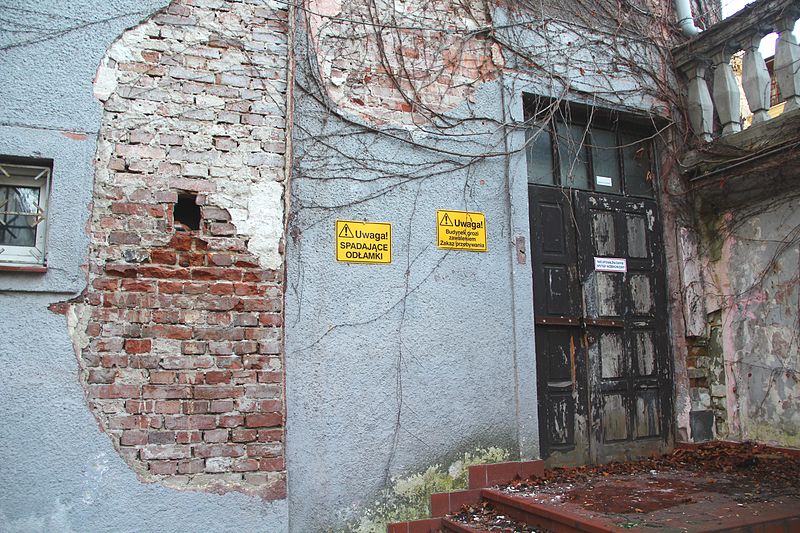
Dziś Czerwona Willa jest w opłakanym stanie. Wygląda to tak, jakby aktualnym właścicielom budynku kompletnie nie zależało na utrzymaniu budynku w dobrej kondycji. Budynek co prawda został w 2009 roku wpisany do rejestru zabytków, co chroni go przed wyburzeniem - nie wymusza to jednak na właścicielu obowiązku renowacji. Willa niszczeje bardzo szybko - z roku na rok, jeśli nawet nie z dnia na dzień, jest w coraz gorszym stanie. Niestety, jest bardzo wysokie prawdopodobieństwo, że to ostatnie lata "życia" tego zabytku. Osobiście uważam, że szczególnie w Warszawie, szczególnie na Mokotowie, który dość mocno ucierpiał w czasie Powstania Warszawskiego, architekturę przedwojenną powinno się bezwzględnie chronić! Jako nastolatka marzyłam, że kiedyś, kiedy będę już "dorosła i bogata", kupię tę willę, wyremontuję i zamieszkam w niej :) Nie ukrywam, że coś z tych marzeń wciąż we mnie pozostało...

Nowadays, The Red Villa is in terribly bad condition. It looks like its actual owner completely doesn't care about it. In 2009 the building was put into the heritage register, what prevents it from being demolished - but it doesn't force the owner to improve villa's condition. The villa decays year by year, day by day, its condition is still worse. Unfortunately, it looks like it won't survive much longer. I think that here, in Warsaw, especially in the Mokotów district, where a lot of buildings was damaged or ruined during the Warsaw Uprising, the pieces of 20s and 30s architecture should be totally prevented! We have lost to many pretty buildings during the World War II! When I was a teenager, I dreamed about that when I will be "adult and rich", I'll buy this villa, renovate it and live in it :) To be honest, I still kinda dream about it...


Źródło/Source: Wikimedia Commons

Zniszczenia Czerwonej Willi
The Red Villa's damage
Źródło/Source: Wikimedia Commons

Niestety, nie udało mi się nigdzie znaleźć zdjęć, ukazujących willę w latach jej świetności - udało mi się jednak znaleźć wizualizację, ukazującą, jak mogłaby wyglądać po renowacji.

Unfortunately, I couldn't find any pictures of The Red Villa during its golden years - but I've found a visualisation how would it look after a renovation.


Źródło/Source: domwawa.pl